
The starting point
The problem reaches beyond a temperature dial.
Employees want personal comfort. People sharing a room affect one another. An organization has energy goals. The interface has to communicate these relationships as well as the temperature itself.
01 / Connecting the system
Personal preferences become a shared action.
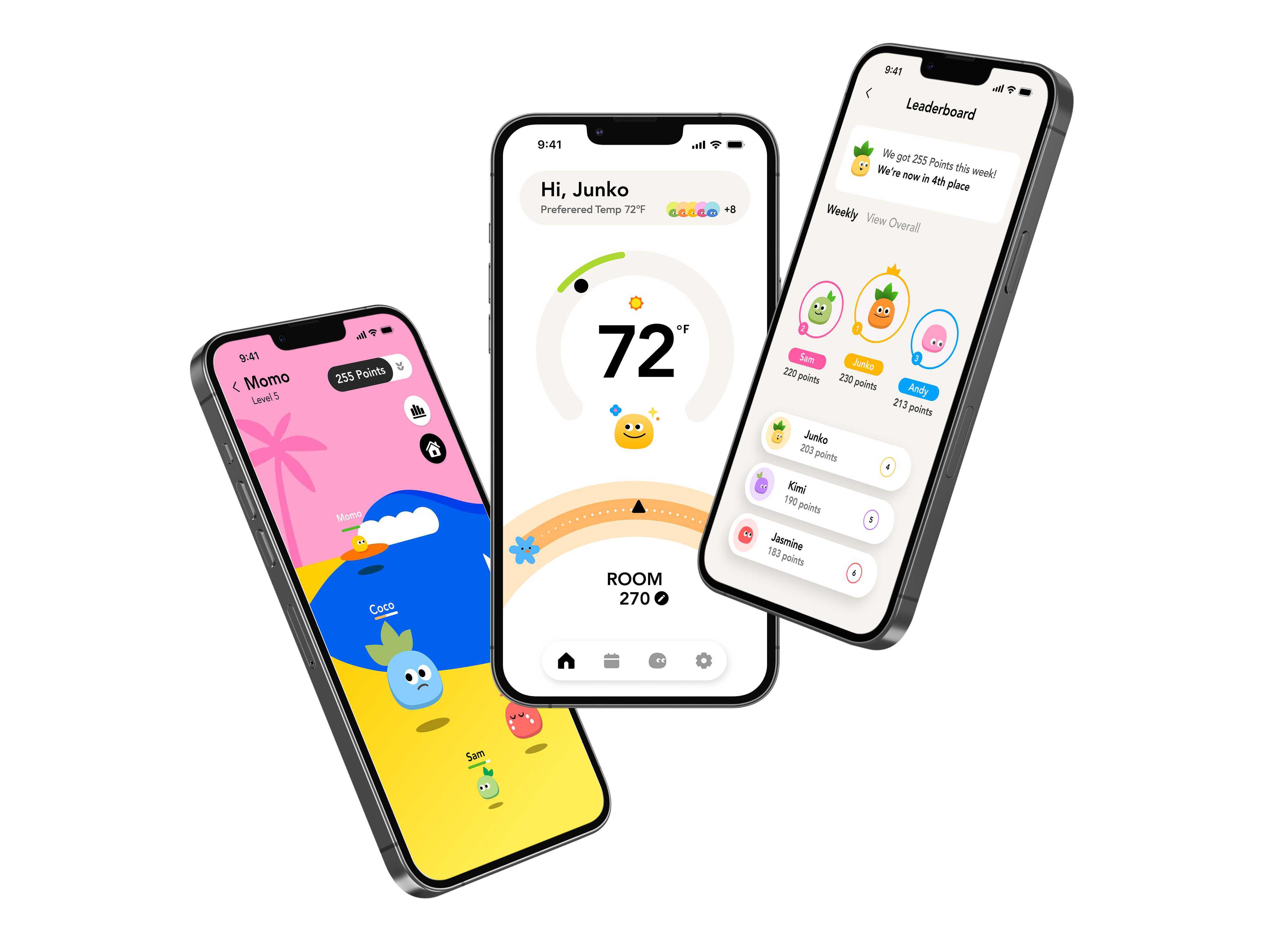
Users express their temperature preferences and connect them with meeting-room information. In the original design, the system averages the preferences of people booking a room and automatically adjusts its temperature.

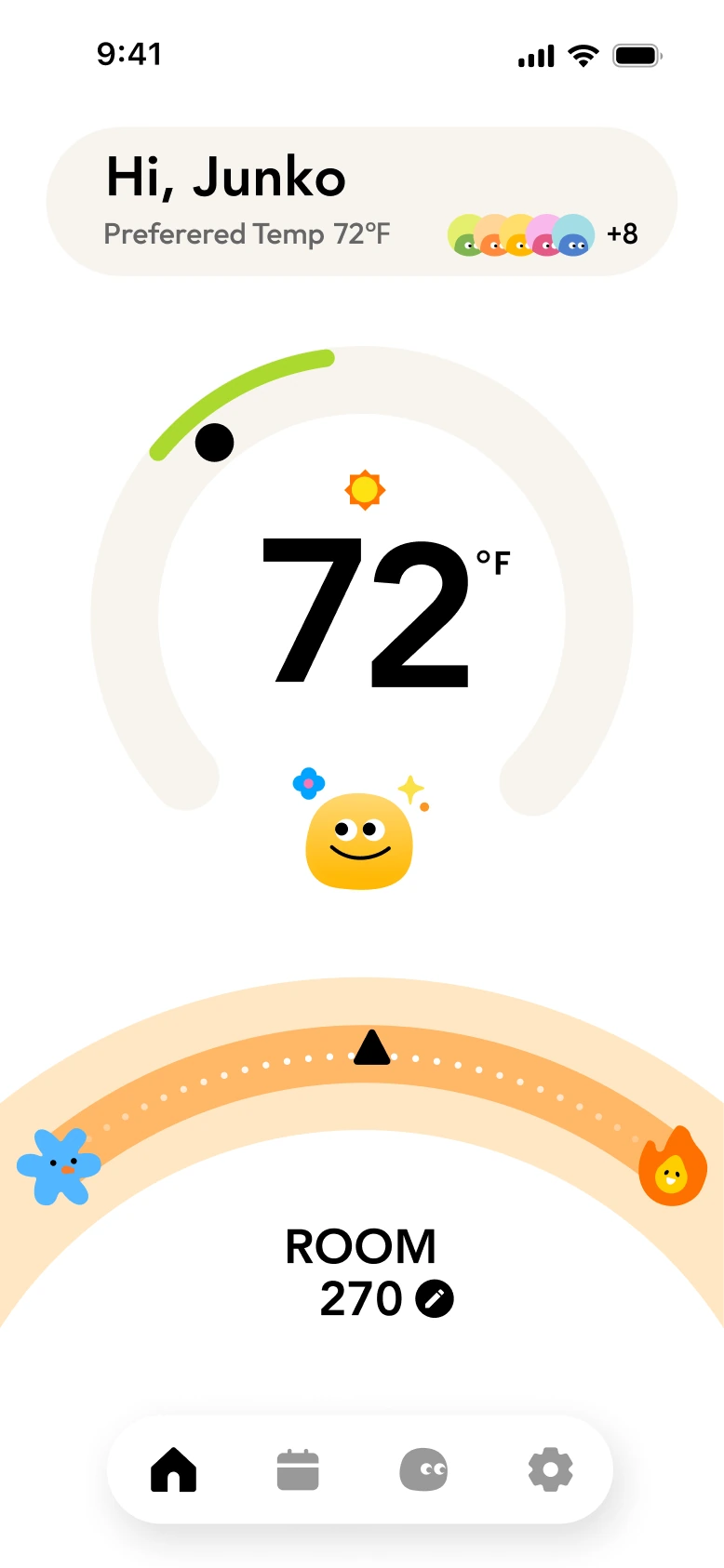
An average is easy to calculate. That does not mean it is comfortable for everyone—or clear who has the right to override it.
02 / A cross-device system
Each device has a different job.
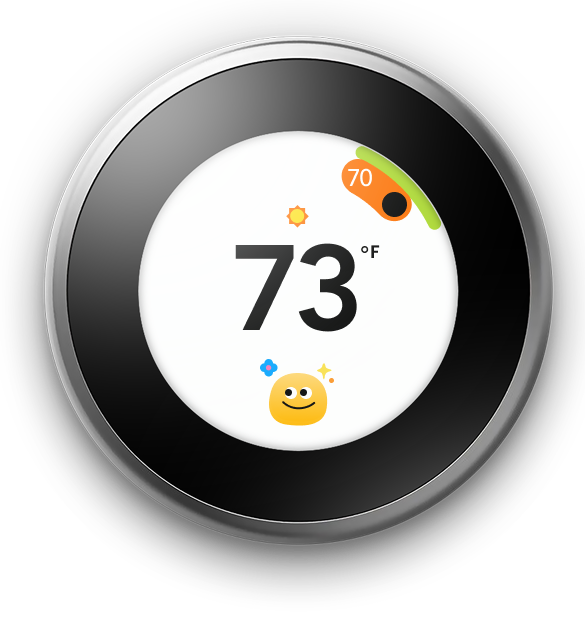
The mobile app carries preferences and room context. The thermostat communicates what the room is doing right now. Its far-view, close-view, adjustment, and heating states change the emphasis with the user’s task.

Bring the temperature into focus.
The close view puts the temperature at the center, with smaller supporting feedback.
Interactive guide to the original static interface states.
A larger temperature readout helps up close. A simpler visual signal works at a distance. During adjustment, feedback needs to connect the input, target, and system response.
03 / Design evolution
Give the temperature more visual priority.
The surviving homepage versions show a move from a large character and dense circular control toward a larger temperature readout, lighter control arc, smaller character, and a separate group-information card.


The UI kit connects controls, feedback, and navigation across the mobile and device experiences. The patterns keep related states coherent across two device contexts.
Outcome + retrospective
Shared control needs explicit rules.
Looking back, I would clarify four distinct values: current temperature, target temperature, personal preference, and group average. Then I would define overrides, missing preferences, and disagreement before expanding the experience.
Why I would reconsider the incentive system
The original design used points, competition, and a pet whose condition could worsen outside an Eco range. This loss-based feedback is difficult to justify when an individual does not fully control a shared setting.
A next iteration should identify what each person can actually control, then test feedback that acknowledges different comfort needs. This is a retrospective assessment, not a change the original team implemented.